Darknet Markets 2026:
The dark web is part of the deep web but is built on darknets: overlay networks that sit on the internet but which can't be accessed without special tools or software like Tor. Tor is an anonymizing software tool that stands for The Onion Router — you can use the Tor network via Tor Browser.
| Darknet Market | Established | Total Listings | Link |
|---|---|---|---|
| TorZon Market | 2022 | 140+ | Onion Link |
| Nexus Market | 2024 | 600+ | Onion Link |
| Abacus Market | 2022 | 100+ | Onion Link |
| Ares | 2026 | 100+ | Onion Link |
| Cocorico | 2023 | 110+ | Onion Link |
Updated 2026-10-26
Nexus Link's Simple Design Makes Darknet Commerce Easy
The architectural foundation of Nexus Link is a streamlined design that directly addresses the core requirements of darknet commerce. This design eliminates unnecessary complexity, creating a user experience that is both intuitive and efficient for conducting private transactions. The interface guides users logically from product discovery to finalization, minimizing friction points that could deter trade or lead to user error.
This efficiency is achieved through a clear, categorized product listing system and a simplified checkout process. The platform's structure supports operational security by default, integrating essential tools like encrypted messaging and cryptocurrency wallets directly into the transaction flow. The design philosophy prioritizes accessibility without compromising on the robust security features that define the marketplace, making sophisticated private commerce available to a broader user base.
The streamlined nature of Nexus Link extends to its economic model. By facilitating direct peer-to-peer digital trade, the platform reduces overhead costs typically associated with traditional retail or even other digital marketplaces. This efficiency translates into competitive pricing for consumers and healthier profit margins for vendors, which in turn stimulates marketplace growth and liquidity. The design is not merely aesthetic; it is a functional framework that enhances the entire ecosystem's viability and resilience.
How Encryption Keeps Your Business Private on the Darknet
The foundation of privacy on Nexus Link is its implementation of end-to-end encryption for all communications. This system ensures that messages between a buyer and a vendor are scrambled from the sender's device and only decipherable by the intended recipient's device. No intermediate server, including the marketplace's own infrastructure, possesses the keys to read the content. This eliminates the risk of message interception and review by third parties, making private negotiation and transaction coordination fundamentally secure.
Beyond messaging, the platform integrates advanced cryptographic protocols for financial transactions and identity protection. User identities are represented by cryptographically generated pseudonyms, which are not linked to real-world identifiers. The use of public-key infrastructure (PKI) means every user operates with a unique pair of keys: a public key for receiving encrypted data and a private key, kept solely by the user, for decrypting it. This architecture guarantees that personal data and transactional details remain confidential and under the sole control of the user.
The encryption model extends to the transactional metadata. While traditional financial systems create clear records of payment origins and destinations, Nexus Link employs techniques like coin mixing and stealth addresses. These methods obfuscate the payment trail on the blockchain, breaking the link between a marketplace transaction and a user's external cryptocurrency wallet. This layered approach to encryption creates a comprehensive privacy shield, allowing for discreet commerce where user activity is protected from external observation and analysis.
How Decentralized Escrow Makes Darknet Trade Safe and Fair
The transactional model on Nexus Link is built around a decentralized escrow system. This mechanism is fundamental to the platform's integrity. In a standard transaction, the buyer's funds are held in escrow by the system itself, not by the vendor or a central administrator. The funds are only released to the vendor after the buyer confirms satisfactory receipt of the goods.
This process directly addresses the core issue of trust in anonymous digital trade. It protects the buyer from fraudulent vendors who might not ship products after payment. Simultaneously, it protects reputable vendors from fraudulent buyers who might falsely claim non-receipt. The escrow acts as a neutral arbiter, ensuring that both parties fulfill their agreed-upon obligations.
The decentralized nature of this escrow is critical. It means control of the funds is distributed and automated by smart contract logic, removing the risk of a single point of failure or corruption. No individual can unilaterally seize or release the escrowed assets. This automation enforces the rules of the trade impartially.
The system's effectiveness is observable in its outcomes:
- It significantly reduces incidents of transactional fraud.
- It creates a predictable and secure environment for commerce.
- It allows vendors to build a positive reputation through verified, completed sales.

How Darknet Market Ratings Build Trust and Ensure Quality
The vendor rating system on Nexus Link functions as the primary mechanism for establishing transactional trust in a decentralized darknet environment. It replaces the need for institutional guarantees with a transparent, community-driven feedback loop. Each completed transaction allows the buyer to leave a detailed evaluation, typically consisting of a numerical score and descriptive comments regarding product quality, shipping speed, stealth packaging, and communication. This cumulative data generates a vendor's public profile, which is prominently displayed on their storefront.
High-rated vendors gain significant marketplace advantages. A consistently positive feedback history results in a trusted vendor badge, elevating their listings in search results and attracting a larger customer base. The system incentivizes ethical business practices, as a single negative review can impact future sales. To ensure authenticity, the platform's architecture allows only verified purchasers to submit feedback, preventing rating manipulation. This creates a self-regulating economy where reputation is a vendor's most valuable asset, directly linking their commercial success to reliable service and high-quality products.
The multi-dimensional nature of the feedback provides nuanced insight beyond a simple star rating. Potential buyers analyze comment histories for specific information, such as the potency of a particular strain or the reliability of shipping to a certain region. This granular data reduces uncertainty for new users and standardizes quality expectations across the platform. Consequently, the rating system does more than build trust; it enforces a form of quality control and professional conduct, fostering a stable and efficient peer-to-peer commerce environment where private transactions can occur with reduced risk.
How Darknet Markets Check Their Products
The marketplace implements a multi-layered verification system to ensure product quality and listing accuracy. Vendors are required to provide detailed photographic evidence of their products, often with specific verification tags that include the listing date and a unique vendor code. This visual proof is the first step in confirming that the seller possesses the advertised goods.
Beyond visual confirmation, the platform relies heavily on its community-driven feedback mechanism. Each transaction concludes with a buyer review that includes specific ratings for product quality relative to its description. A pattern of positive reviews for a particular listing reinforces its reliability, while discrepancies trigger alerts. This collective intelligence creates a self-correcting environment where inaccurate listings are quickly identified through user experience.
For certain high-value or common items, the system employs verified sample testing. Trusted, long-standing members of the community, independent of the vendor, may perform qualitative analyses. Their reports are then published in a dedicated section of the vendor's profile. This process adds a peer-review layer that significantly reduces misrepresentation.
The cumulative data from these processesverified images, consistent buyer feedback, and sample reportsfeeds directly into the vendor's overall trust score. A high score grants vendors greater visibility and credibility. This structured approach to verification transforms subjective assessment into a reproducible standard for transactional reliability, directly supporting a secure and predictable commercial environment.
How P2P Trade on the Darknet Makes Buying Drugs Efficient
The peer-to-peer (P2P) architecture of Nexus Link is fundamental to its operational efficiency. By facilitating direct transactions between buyers and vendors, the platform eliminates intermediary fees and centralized points of control that typically slow down digital commerce. This model allows for faster settlement times and reduces operational overhead, as the marketplace itself does not handle funds or inventory directly.
Efficiency is further enhanced by the integration of decentralized escrow and automated finalization. Funds are held securely in a multi-signature escrow until the buyer confirms satisfactory receipt of goods. This process, governed by smart contract logic, automates a critical layer of trust and dispute resolution without requiring manual intervention from platform administrators for every transaction. The system's design minimizes delays and ensures that capital is released promptly upon fulfillment of terms.
The platform's infrastructure supports this efficient exchange through:
- Cryptocurrency transactions that enable near-instantaneous, borderless payments without traditional banking delays.
- A robust vendor rating system that streamlines buyer decision-making, reducing time spent on vetting.
- Encrypted but user-friendly communication channels that allow for clear, direct negotiation and logistics coordination between trade partners.
Consequently, Nexus Link creates a streamlined environment for digital trade. The combination of direct P2P interaction, automated trust mechanisms, and supportive tools results in a marketplace where private commerce can be conducted with a speed and fluidity that rivals, and often surpasses, conventional e-commerce models focused on legal goods.
How the Model's Security Builds Trust for Darknet Commerce
The operational security of Nexus Link is not reliant on a single mechanism but is the result of a multi-layered security architecture. This integrated approach ensures that each stage of a transaction, from discovery to finalization, is protected by complementary systems designed to mitigate risk and preserve user autonomy.
At the network level, access is mediated through the Tor network, which obfuscates user IP addresses and routing data. This foundational layer ensures that the physical location and identity of participants remain separated from their marketplace activities. All communications and data within the platform are secured with end-to-end encryption. This means that messages, order details, and financial information are encrypted on the sender's device and only decrypted by the intended recipient, making intercepted data useless to any third party.
The marketplace's financial security is upheld by its decentralized escrow system. Funds for a transaction are held in a secure, multi-signature wallet controlled by a smart contract. Release requires agreement from at least two of the three parties involvedbuyer, vendor, and the arbitration system. This model effectively eliminates the risk of exit scams by individual vendors while distributing trust, as no single entity has unilateral control over the held currency.
Account integrity and community trust are reinforced by a persistent vendor rating and review system. Every completed transaction contributes to a vendor's public reputation, creating a transparent history of reliability and product quality. This system employs several safeguards against manipulation:
- Only verified purchasers can leave feedback.
- Review weighting may account for account age and history.
- Dispute resolutions are logged separately, providing context to any transactional issues.
Finally, the platform's commitment to security extends to operational security guides for its users, promoting best practices for personal digital safety. When combined, these featurestraffic anonymization, strong encryption, decentralized finance controls, and a reputation economycreate a robust environment where private commerce can be conducted with a significantly reduced threat profile compared to unregulated or less sophisticated darknet platforms.
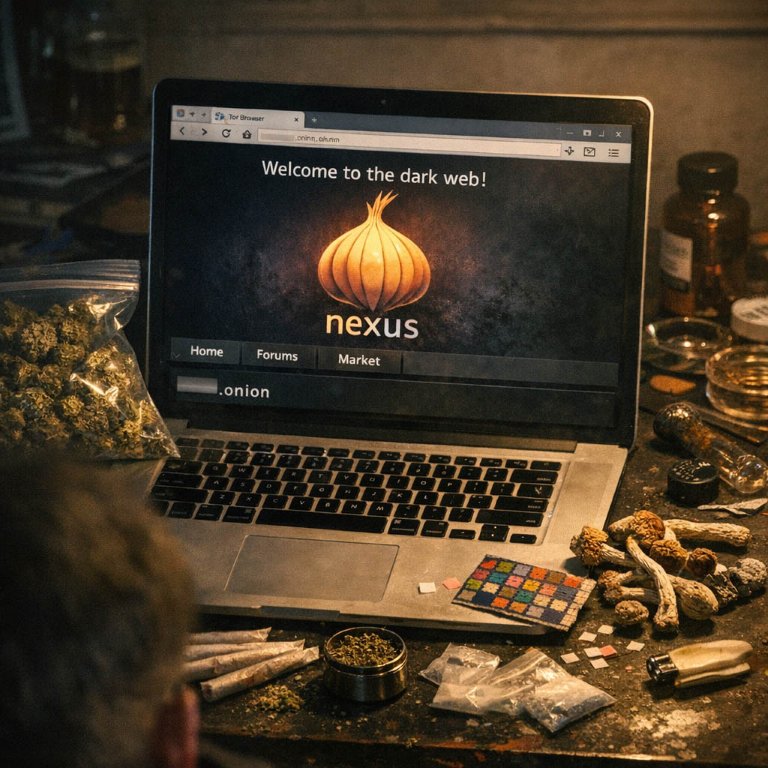
How Nexus Link Makes Darknet Drug Trade Safe and Private
The Nexus Link platform establishes a private commerce environment by integrating several core architectural principles. Its foundation is a decentralized infrastructure, which removes the single point of failure and control inherent in centralized servers. This structure makes the marketplace inherently more resistant to external shutdowns and unauthorized data collection, as no central entity holds complete transactional or user data.
Privacy is operationalized through mandatory end-to-end encryption for all communications. This ensures that messages between buyers and vendors, including order details and shipping information, are only readable by the intended parties. The platform couples this with robust cryptographic currency transactions, typically utilizing privacy-focused cryptocurrencies, to sever the direct link between a user's identity and their financial activity on the darknet.
The marketplace's design fosters trust without compromising anonymity. The decentralized escrow system secures funds until the buyer confirms satisfactory receipt of goods, protecting both parties from fraud while preventing any central authority from seizing escrowed assets. This is complemented by a transparent vendor rating and product verification process. Historical performance data and community feedback are aggregated into reliable reputation scores, enabling informed purchasing decisions based on a vendor's proven record of delivering quality products.
Consequently, Nexus Link creates a self-regulating ecosystem for commerce. It provides the necessary tools for secure, anonymous trade in various goods, including recreational pharmaceuticals, by ensuring transactional integrity and building reliable reputation metrics. The environment supports efficient peer-to-peer exchange where privacy and security are not optional features but fundamental, built-in characteristics of the platform's architecture.